Bleepbook
Emergency Department Placement Handbook
Emergency Department Placement Handbook
Couldn't load pickup availability
An Emergency Department (ED) placement offers the opportunity to develop essential assessment, prioritisation and clinical decision-making skills while caring for patients with a wide range of acute illnesses and injuries. From minor injuries to major trauma, cardiac emergencies and sepsis, every shift presents new learning opportunities within a fast-paced, multidisciplinary environment.
Emergency nursing requires the ability to assess patients systematically, recognise deterioration early and communicate effectively under pressure. Understanding how patients are prioritised, investigated and managed is fundamental to delivering safe, timely and effective care.
This UK-specific Emergency Department Placement Handbook has been developed to help you understand the patient journey, build confidence in clinical practice and apply nursing knowledge within the emergency setting. It brings together anatomy and physiology, assessment skills, pharmacology and emergency nursing principles to help you understand not only what is happening, but why it matters in everyday clinical practice.
What's Inside?
160 pages of practical, placement-focused learning, including:
- An introduction to the Emergency Department, including patient flow, triage, resuscitation, majors, minors and clinical decision-making.
- A structured approach to patient assessment using the A–E assessment framework.
- Triage principles, prioritisation and recognising clinical deterioration.
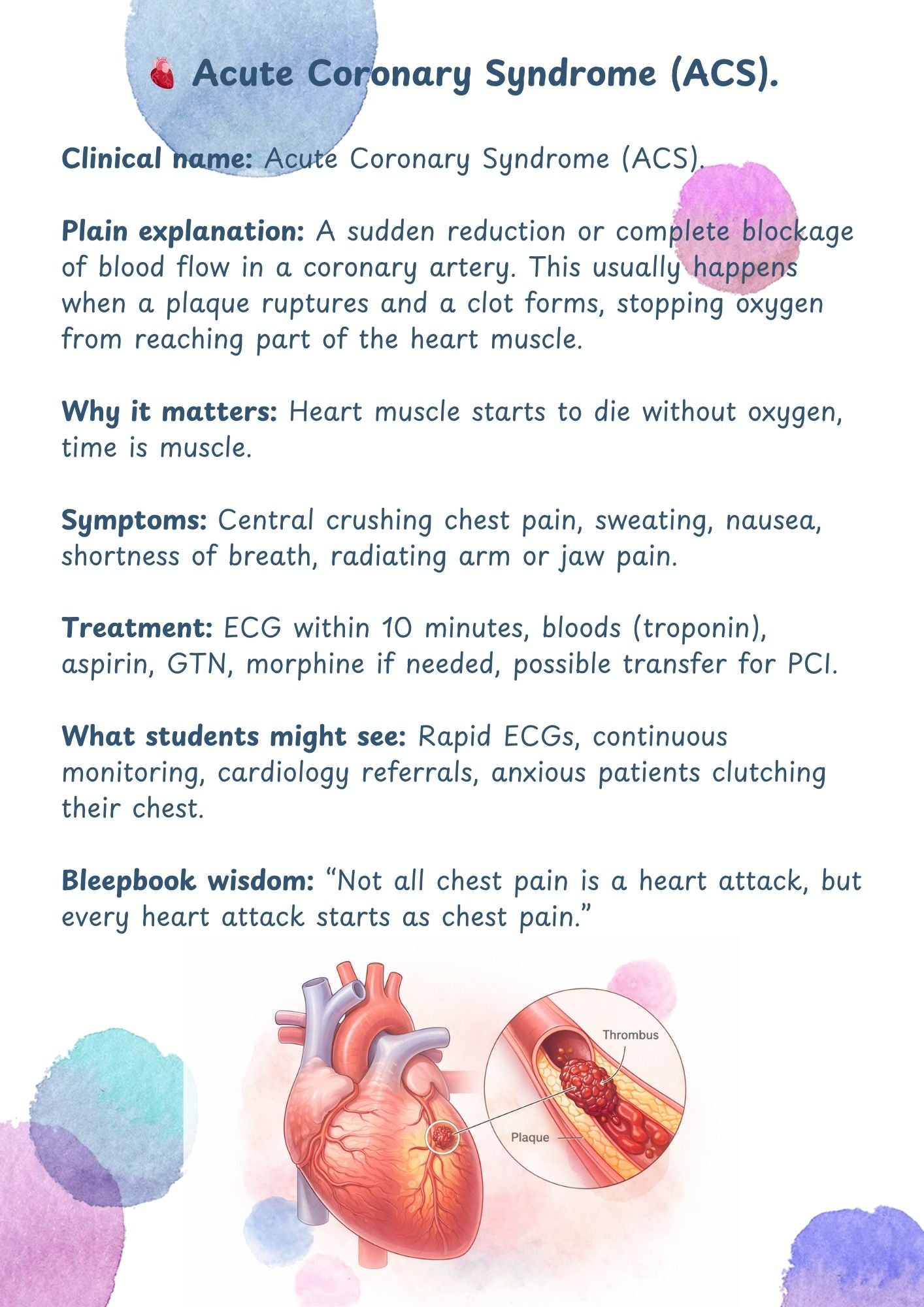
- Recognition and management of emergency presentations, including sepsis, stroke, acute coronary syndromes, respiratory emergencies, trauma and shock.
- Practical nursing care including observations, pain management, wound care, intravenous therapy and emergency interventions.
- Common investigations including ECG interpretation, blood tests, imaging and point-of-care testing.
- Understanding how investigation results support assessment, diagnosis and ongoing patient management.
- NMC Proficiency links demonstrating how everyday placement experiences contribute to professional development.
Who Is This Handbook For?
- UK student nurses undertaking Emergency Department, Acute Admissions or Urgent Care placements.
- Student nurses who want to strengthen their assessment skills before or during placement.
- Newly qualified nurses beginning practice within emergency or acute care settings.
- Anyone wanting to build confidence in rapid assessment, prioritisation and recognising deterioration.
Why Choose This Handbook?
This handbook has been written with clinical practice at its core. Rather than simply describing emergency conditions, it explains how they influence nursing assessment, prioritisation, clinical decision-making and patient care.
It will help you:
- Develop confidence assessing patients in a fast-paced emergency environment.
- Understand the rationale behind emergency nursing assessments and interventions.
- Recognise deterioration early and understand when escalation is required.
- Communicate effectively with the multidisciplinary team, including emergency physicians, nurses, paramedics and allied health professionals.
- Apply anatomy, physiology and pharmacology to real clinical situations.
- Build the knowledge and clinical reasoning needed to make the most of your Emergency Department placement.
Share