Hypertension: What Persistent High Blood Pressure Does to the Body
Understand what determines blood pressure, how hypertension is confirmed and why persistent raised pressure damages the arteries, heart, kidneys, brain and eyes.
Open learning page →Conditions & Pathophysiology
Explore conditions affecting the cardiovascular system and understand what changes from normal function.
Understand what determines blood pressure, how hypertension is confirmed and why persistent raised pressure damages the arteries, heart, kidneys, brain and eyes.
Open learning page →
Understand Takotsubo syndrome by following what happens when part of the left ventricle temporarily stops contracting normally, why it can resemble myocardial infarction and how patients...
Open learning page →
Understand infective endocarditis by following how a vegetation forms, how it damages the valve and sends infection through the circulation, and what those changes can look...
Open learning page →
Understand heart failure by following what happens to forward blood flow, filling pressure and congestion, then connect the physiology to symptoms, assessment and nursing care.
Open learning page →
Follow atrial fibrillation from disorganised atrial electrical activity to an irregular ventricular response, symptoms, stroke risk and nursing care.
Open learning page →
Understand cardiomyopathy by following how changes in the myocardium affect ventricular filling, contraction and rhythm, and how those changes appear in the patient's symptoms and assessment.
Open learning page →
What does high cholesterol actually do? Learn how LDL and other lipoproteins contribute to atherosclerosis, how to interpret a lipid profile, when to suspect familial hypercholesterolaemia...
Open learning page →
What actually happens during a myocardial infarction? Follow the path from coronary ischaemia and myocardial injury to ECG changes, troponin, reperfusion, complications and nursing care.
Open learning page →
Understand pericarditis by following what inflammation around the heart does, why the pain and ECG can change, and how a pericardial effusion can progress to cardiac...
Open learning page →
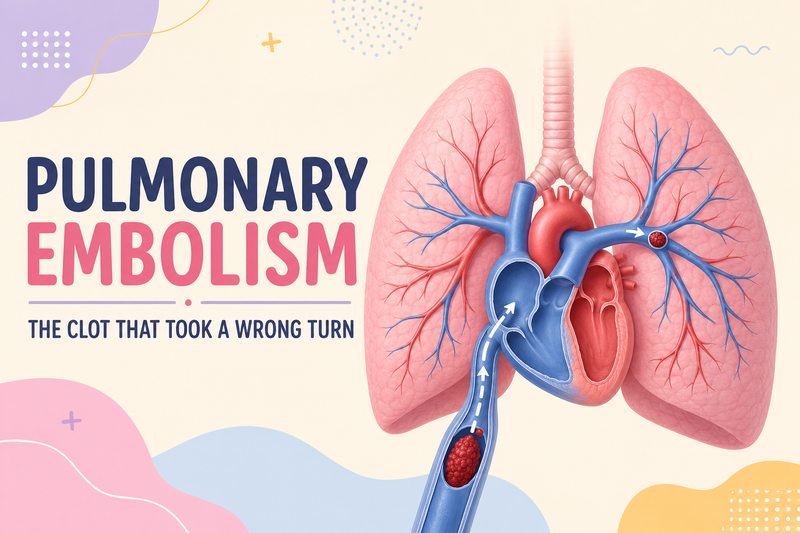
How pulmonary embolism can present, what the diagnostic pathway may involve and when student nurses should escalate urgently.
Open learning page →